
Halfway Around the World
Flying into Mumbai, the city’s high-rises glinted a greeting in the afternoon sun. I soon discovered that flying the sky was a lot easier than navigating Mumbai’s roads. As the horns honked, I walked through Bandra and got my first lesson in how to cross four lanes of continuously moving traffic without blinking. An experience that sharply accelerated my learning curve!
I soon realised that I had to simultaneously look left, right as well as behind my back. In Mumbai, traffic flows from everywhere. As I watched my hosts complete the task without so much as a blink of an eye, I knew what mastery looked like. But I was on the journey to proficiency.
The next day I became Lois the tourist: walking Bandra, the promenade and the fishing village, to the ruined Portuguese fort walls at Land’s End. I took in the city’s contrasting worlds of old and new – a theme that would continue to unfold throughout the journey.
And then it was time to work!
Looking Into the Mirror with Love
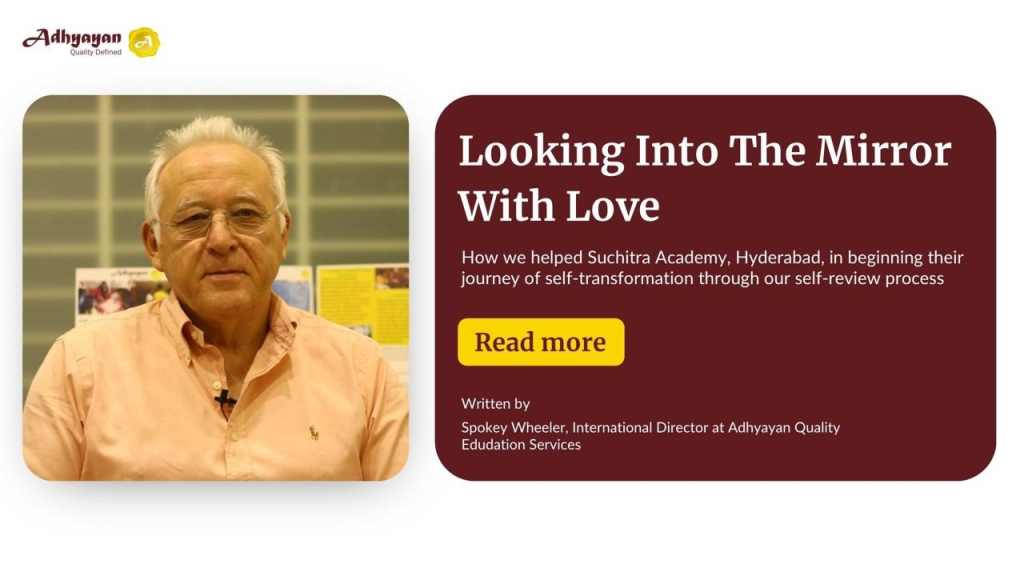
Five days ago, all we knew of Suchitra Academy was what its website told us. Today, our team of assessors understands the school better than ever—perhaps even better than those within the school community itself.”
This is the magic of a school review with Adhyayan. The journey begins with curiosity and ends in transformation, not only for the school but also for the people who are part of the process.
The Abode of Clouds:

I found ‘The Abode of Clouds’ in a 7-year-old diary. Re-reading old diaries often opens a window into the present as well as the past. Instead of being discovered in a dusty attic under a pile of magazines, my memories are recorded, accidentally archived, sometimes lodged in random electronic files and folders, and even downloaded from now discarded or defunct computers. Once opened, though, they speak to me as potently as the school I worked with yesterday!
Empowering Tomorrow: An Exploration of Student Voice
Did you know that only 34% of 18-year-olds in India are still enrolled in school or other educational institutions?
For the upcoming generation, regardless of whether they are born in Cambridge or Kolkata, the world will be more complex than it is today. They will navigate a technologically advanced environment where even Chat GPT could be replaced by newer innovations.
By 2040, students will need to make independent decisions for themselves, their families, and society, without relying on their parents for guidance. Are we preparing our students to become responsible citizens with their own unique voices?
The Road Less Travelled
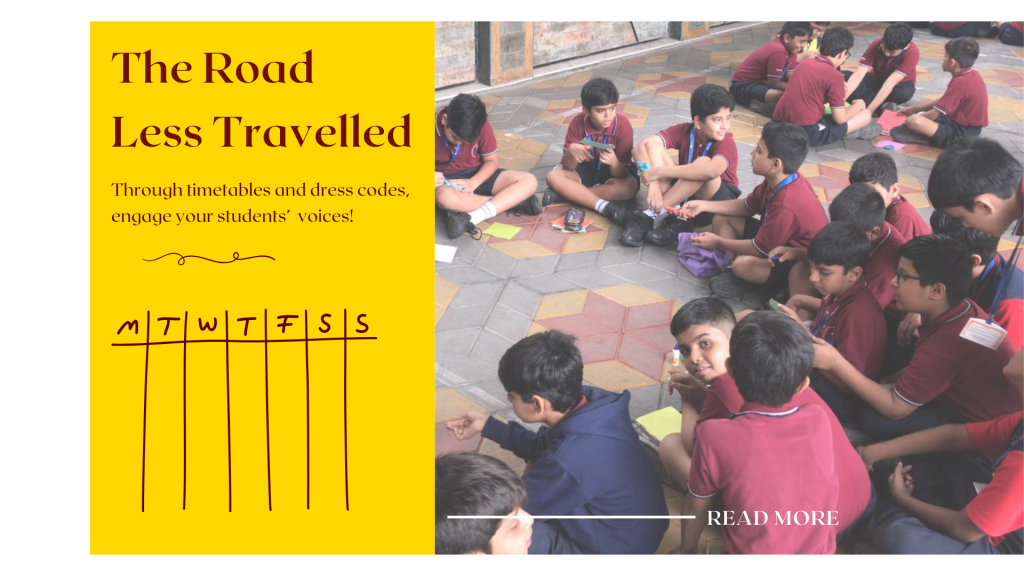
How far down the road are you as a school community in creating a systemic culture of engaging student voice?
VOICES OFF !
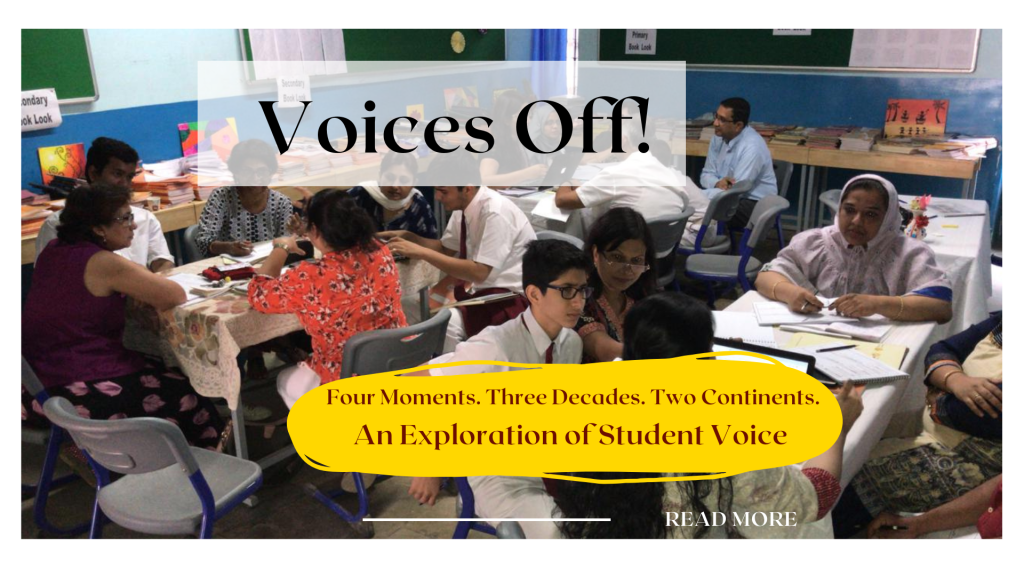
We talk a lot today about student voice, about engagement and ownership but too often those are waiting room conversations marked by abstractions of aspirations, intentions and imperatives. So, this month I want to explore student voice, what it sounds and looks like and how it is impacted by the behaviours of their teachers and leaders and the culture and the systems that enrich or diminish them.
An Oasis In The Pink City
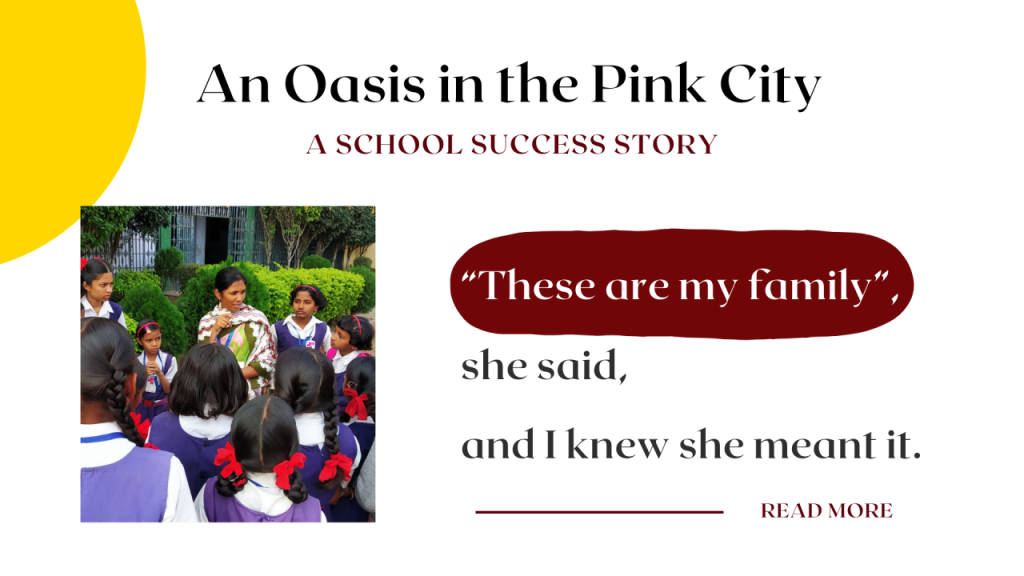
“An Oasis in the Pink City” is a school success story that is all heart. Read on to learn about a principal who demonstrates robust, adaptive & empathetic leadership by empowering her school community.
MONSOON IN MUMBAI
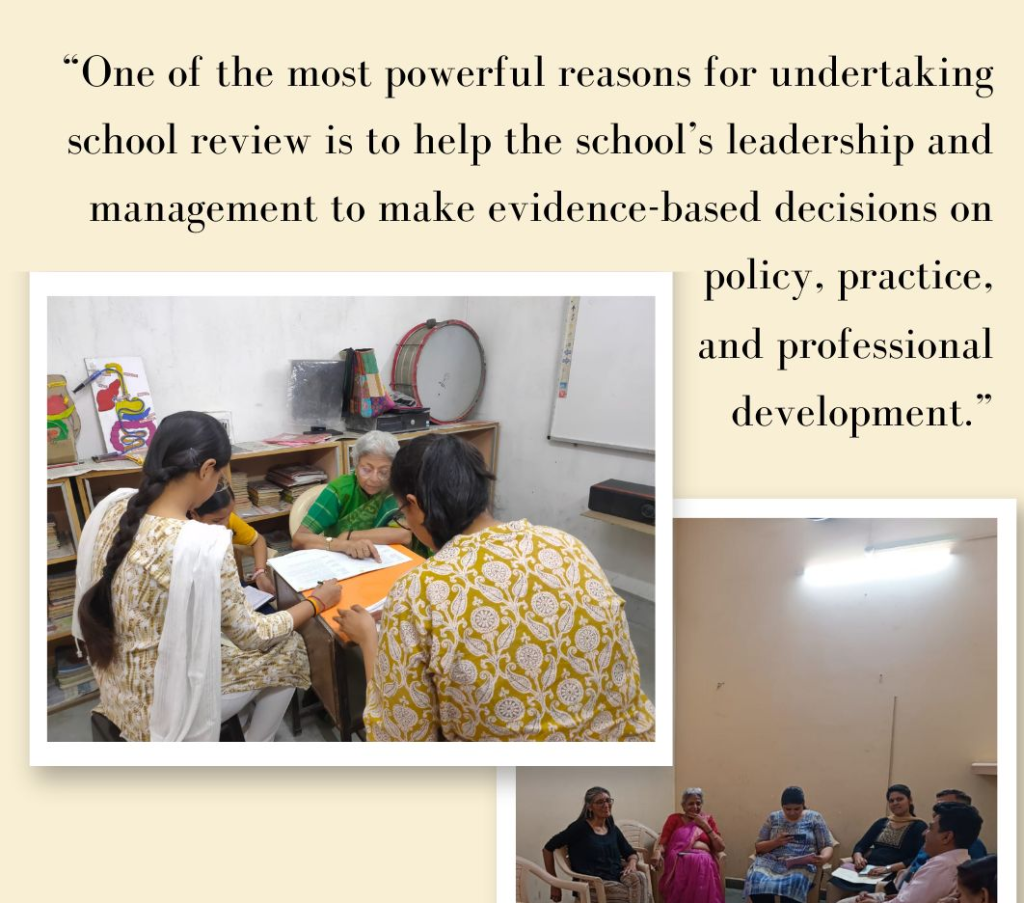
I was reviewing a K-12 school, no shoes, only sandals with trousers ready to roll up and trying to keep clear of the downpour. Most of the corridors were enclosed so I didn’t have to worry about anything other than misted windows and humidity. But at the end of the 2nd floor corridor was an open stairway. Since the rain had stopped, I decided to take the stairs. Halfway down, I slipped on the water lying on a step and only just saved myself. When later that day I went to check out the medical room, I asked for the accident report book. When I sat down and went through it page by page I found three entries of students having fallen on that staircase over the past couple of months. I congratulated the school nurse for her diligence in recording accidents. I then asked her, “Does anyone ever ask to see the accident book?” The answer was “No!”
The Long & Winding Road
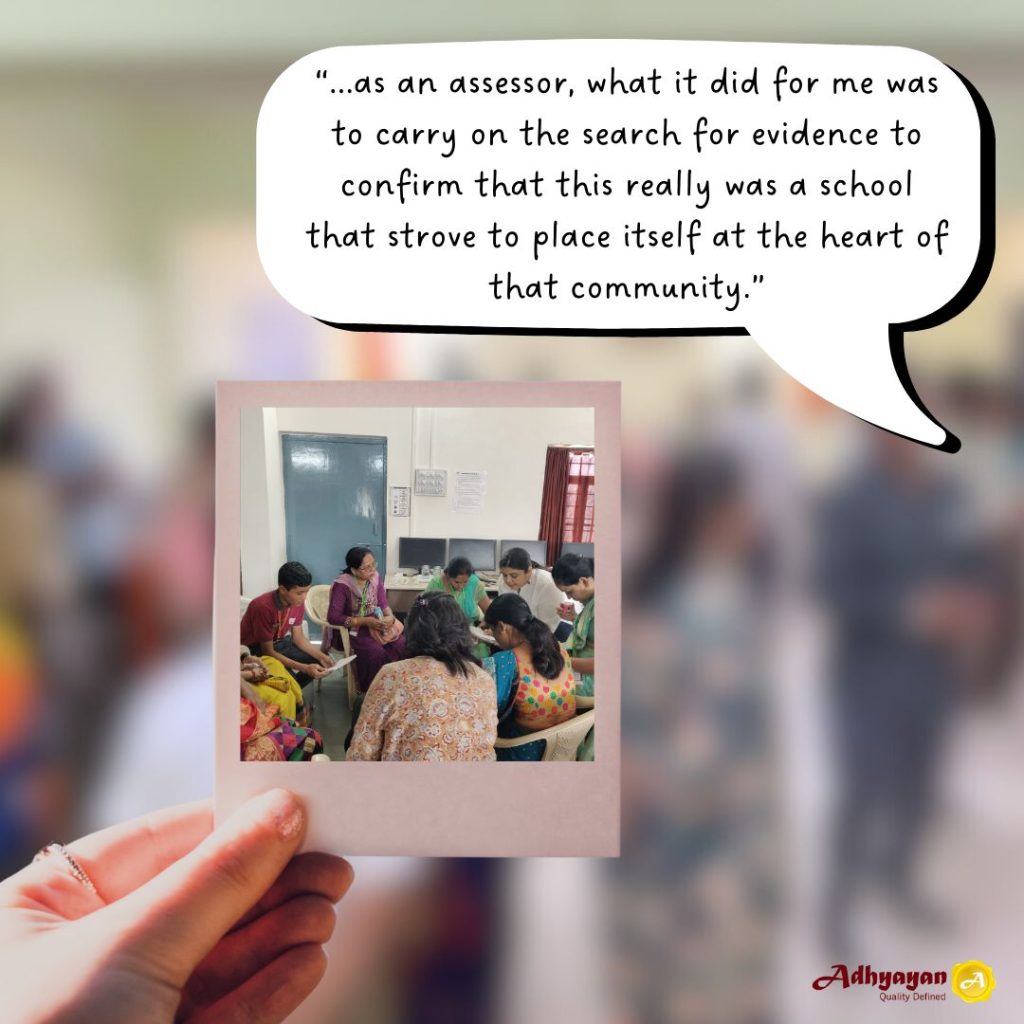
Somewhere in the middle of rural Madhya Pradesh, an all-age 3-16 years school is opening its doors for the day. The lane feeding the school is winding and narrow with high hedgerows on either side. While parent vehicles can pull into the school field, the absence of school buses is replaced by tempos, rickshaws, bikes and ‘scootees’ which disgorged onto the roadside, were supplemented by random, fast moving trucks and bikes.
Data Leads Learning
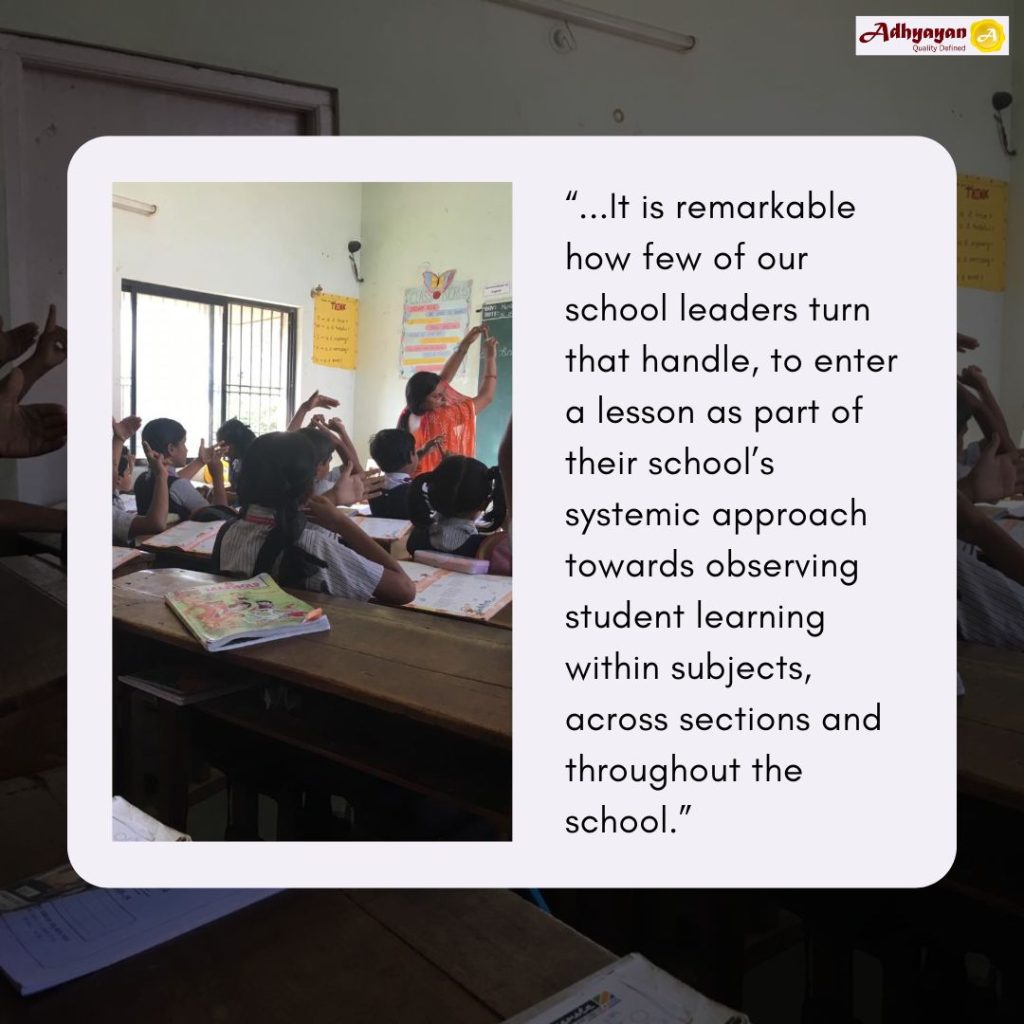
Which is the handle that is turned least often by schoolleaders? That’s right. It’s the one attached to the classroom door.
LEADERSHIP SNAPSHOT
Why is it that Learning Walks have been integral to every one of over 1800 Adhyayan School Reviews we have led since 2012? And why is it that each day’s walk begins and ends at the school gates? My personal tally of reviews, which is now in the hundreds, combined with my evidence accrued from leading 5 schools, three in Europe and two in India, has convinced me that my learning walks are invaluable in helping me take the daily temperature of the school’s health and in confirming the culture of its community.
Learning Walks – taking the School’s Pulse
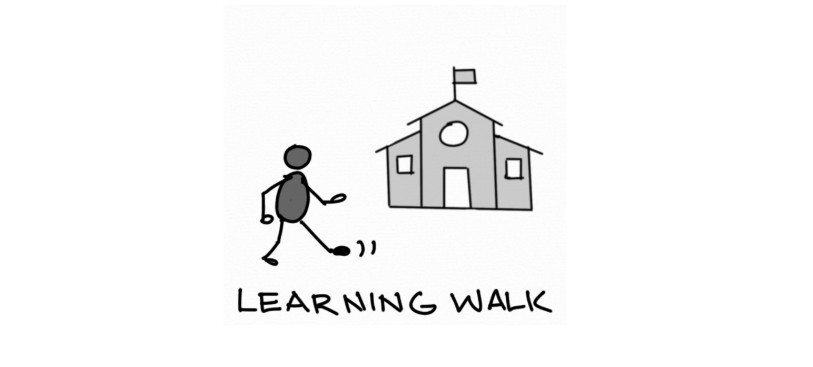
The top schools in our country and the best around the world have one thing in common. Their school leaders take daily walks around their school, walking the grounds, the corridors and most importantly the classrooms. Why do they do that? Schools are living breathing organisms, so their leaders want and need to keep in touch with the school’s pulse.
WHAT A GOOD SCHOOL LOOKS LIKE
A good school is more than walls and classrooms—it’s a living, breathing community that shapes lives.
At its heart are five qualities that define excellence.
How do experiences shape classroom learning?
Elif Shafak’s The Island of Missing Trees highlights how learning goes beyond classrooms, as seen in Kostas’s bond with a resilient fig tree. His journey shows the power of personal experiences, cultural traditions, and nature in shaping understanding. The story reminds educators to embrace diverse learning styles and reflection. This approach fosters inclusivity, deeper understanding, and helps students thrive in their own unique ways.
A good school listens
At Fazlani L’Académie Globale, we foster a strong, inclusive community where every voice matters.
Our Studentpreneur and Teacherpreneur programs empower students and teachers to lead and innovate.
Students solve real-world problems and support peer learning, while teachers share best practices.
As a leader, I nurture a culture of creativity, agency, and continuous growth.
These initiatives build confidence, resilience, and essential leadership skills.
What a good school of the future looks like?
Schools must look to the future and make changes even as current activities continue. This poses numerous challenges in four major domains, viz., facilities, curriculum, faculty, and pedagogy, in diminishing order of difficulty in implementing changes.
Growing Child-Focused Leadership In Schools: Good Practices from School Leaders

An animated discussion among Adhyayan lead assessors, provoked by our Founder Kavita’s question about what facilitates and what inhibits schools from growing their second line of leadership, enabled us to gather insights on effective, sustainable leadership.
What Good Looks Like: It’s a package
In today’s world, a good school is more than just a place of instruction—it’s a space where children feel safe, valued, and inspired to become their best selves. For me, a good school is defined by many “Good” things that come together to nurture well-rounded individuals. Read on to find out what I believe makes a school truly good…
What Good Looks Like: Schools as Ecosystems of Learning
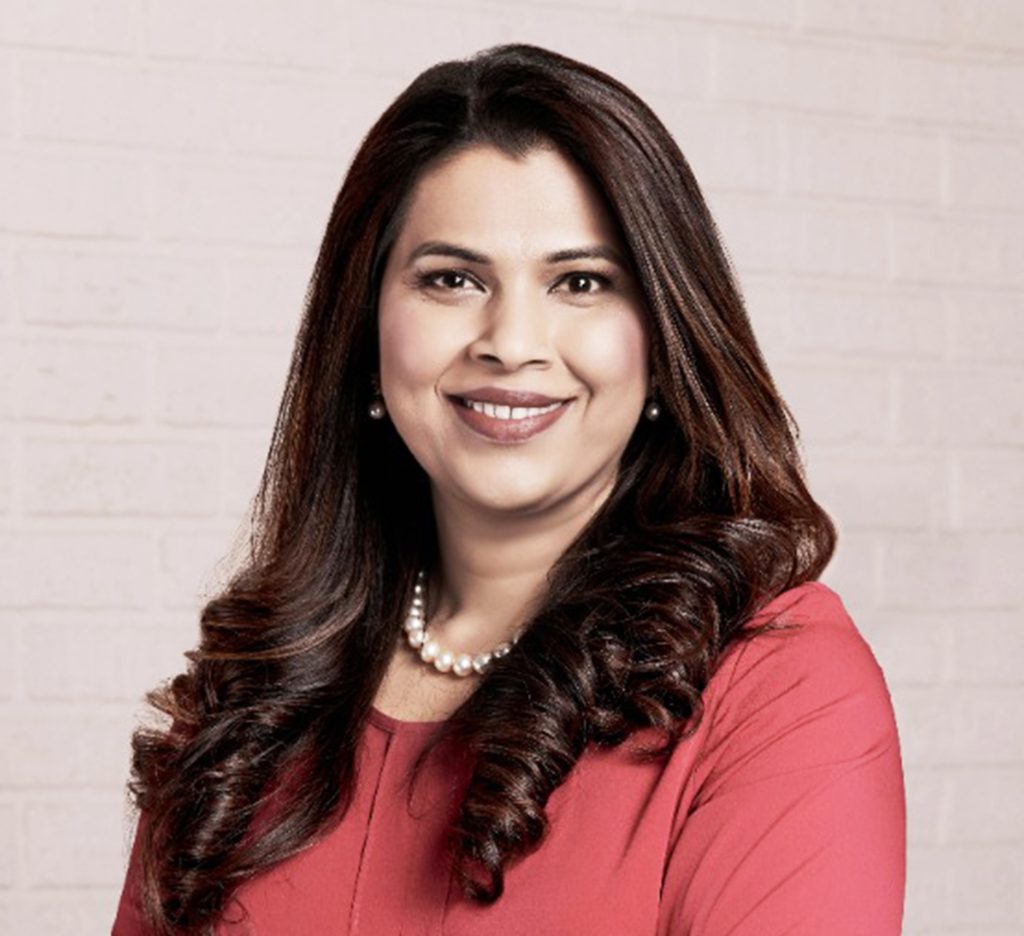
A good school is not defined by the latest technology, the grandest infrastructure, or even the most rigorous curriculum. At its core, a good school is simply about getting the fundamentals right—creating an environment where students think deeply, grow holistically, and develop the resilience to navigate an uncertain future.
People. Purpose. Possibility: What Great Schools Are Made Of
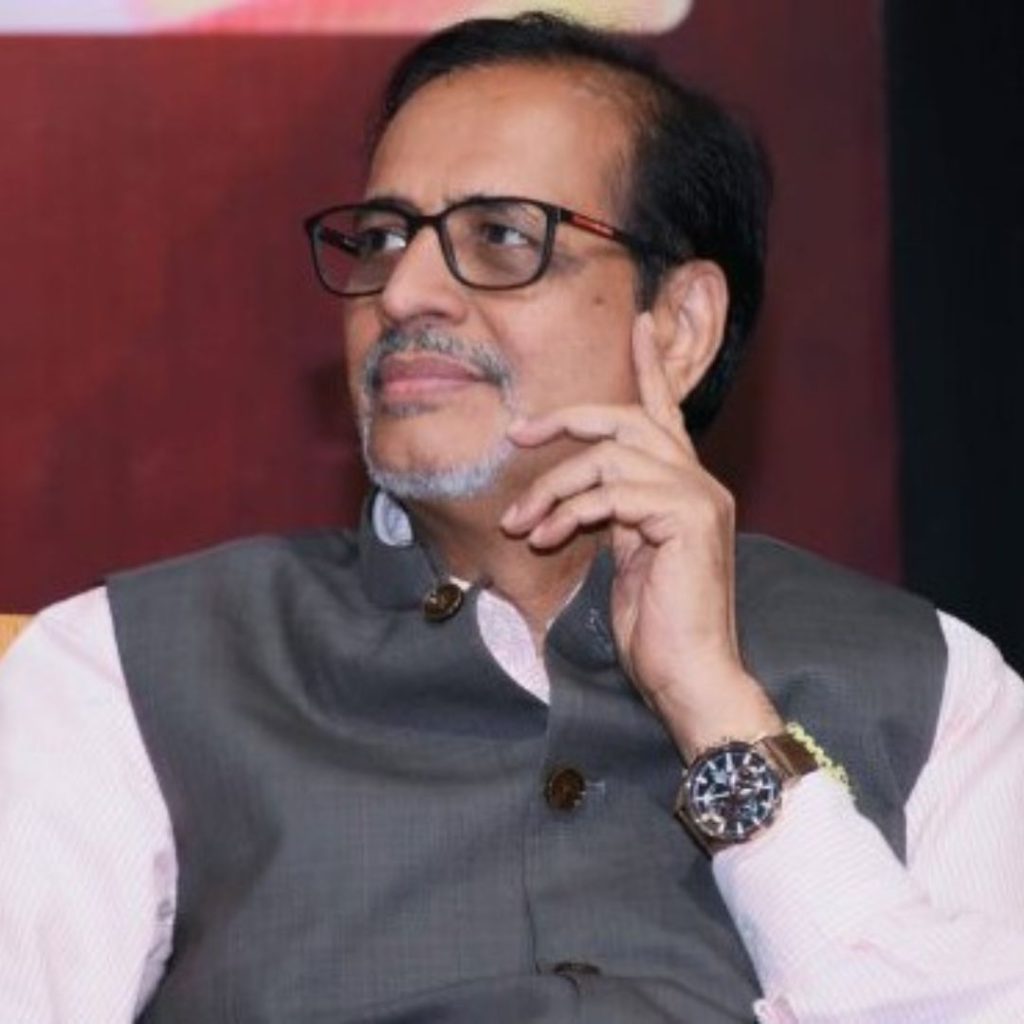
We’re delighted to feature the reflections of Mr Ashok Pandey, a veteran school leader and educationist with decades of experience across India and beyond. His words echo many of the patterns we’ve observed in schools that are creating deep, meaningful impact—not just for their students, but for their communities.
What Good Looks Like: A Shared Vision of Excellence
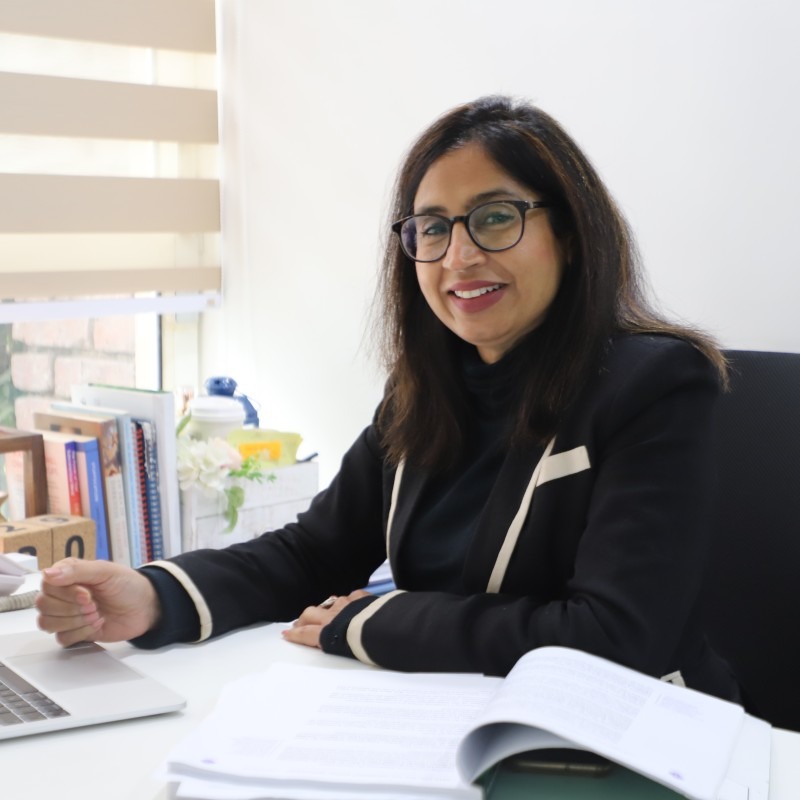
At Adhyayan, we believe that a good school isn’t just a vague idea—it’s a well-defined and research-backed reality. Through this blog series, we shine a light on the practices and processes that drive school transformation. We do this by engaging in conversations with educators and leaders who have dedicated their lives to creating environments where every child thrives.
An Act of Hope
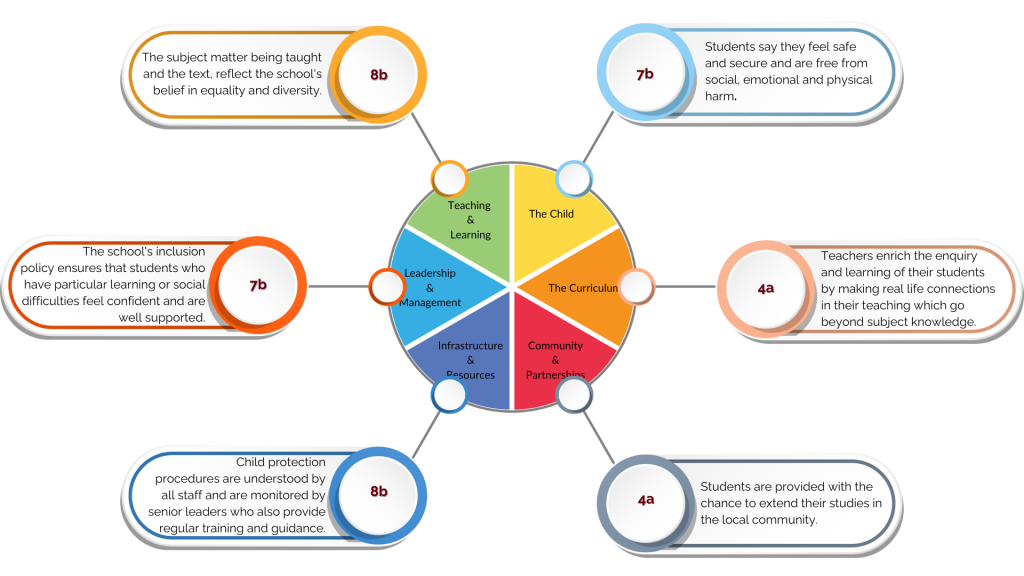
I spend my days at Adhyayan working with educators and school leaders from leading schools across the country who work tirelessly and sometimes thanklessly to educate the students walking into their schools. We also introduce schools to our standards for a good school, some of which I’ll share in this post…