Flying into Mumbai, the city’s high-rises glinted a greeting in the afternoon sun. I soon discovered that flying the sky was a lot easier than navigating Mumbai’s roads. As the horns honked, I walked through Bandra and got my first lesson in how to cross four lanes of continuously moving traffic without blinking. An experience that sharply accelerated my learning curve!
I soon realized that I had to simultaneously look left, right as well as behind my back. In Mumbai, traffic flows from everywhere. As I watched my hosts complete the task without so much as a blink of an eye, I knew what mastery looked like. But I was on the journey to proficiency.
The next day I became Lois the tourist: walking Bandra, the promenade and the fishing village, to the ruined Portuguese fort walls at Land’s End. I took in the city’s contrasting worlds of old and new – a theme that would continue to unfold throughout the journey.
And then it was time to work! The following morning, we headed out from Bandra over the Sea Link Bridge with an almost 360-degree view of the city.
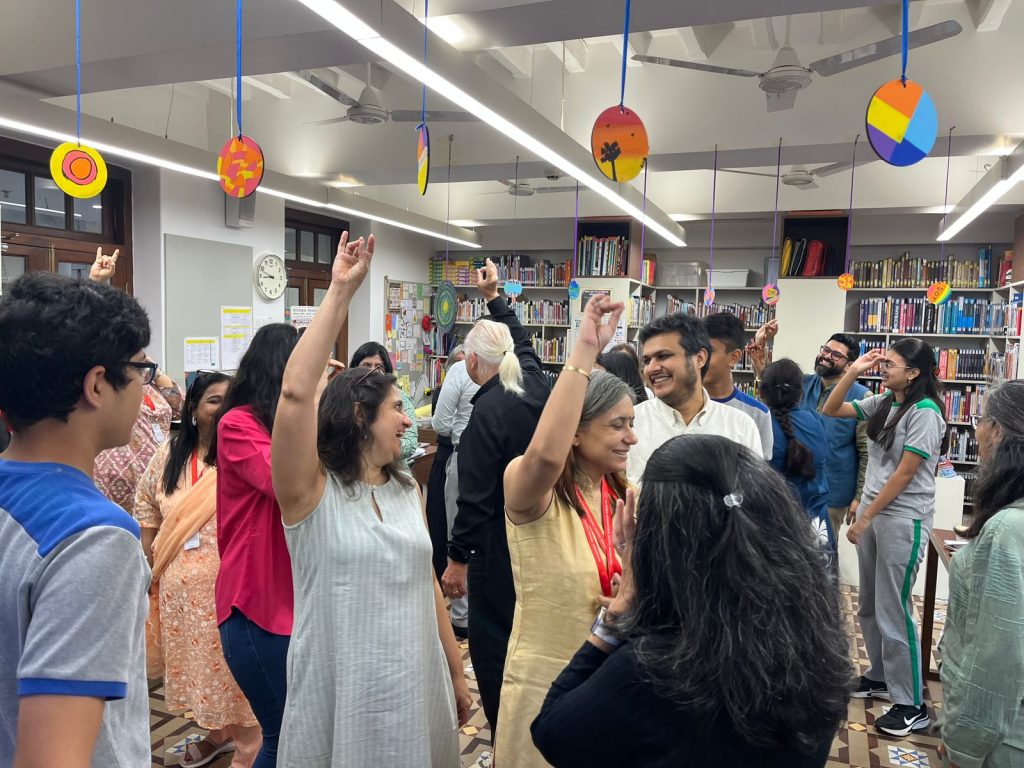
Adhyayan’s orientation day at Bombay International School (BIS) brought together a team of 25 stakeholders – school leaders, parents, teachers, students, alums and the veteran Adhyayan team of assessors. Each member of the school team of students, parents, teachers and leaders brought their unique lived experience and a passion for their school.
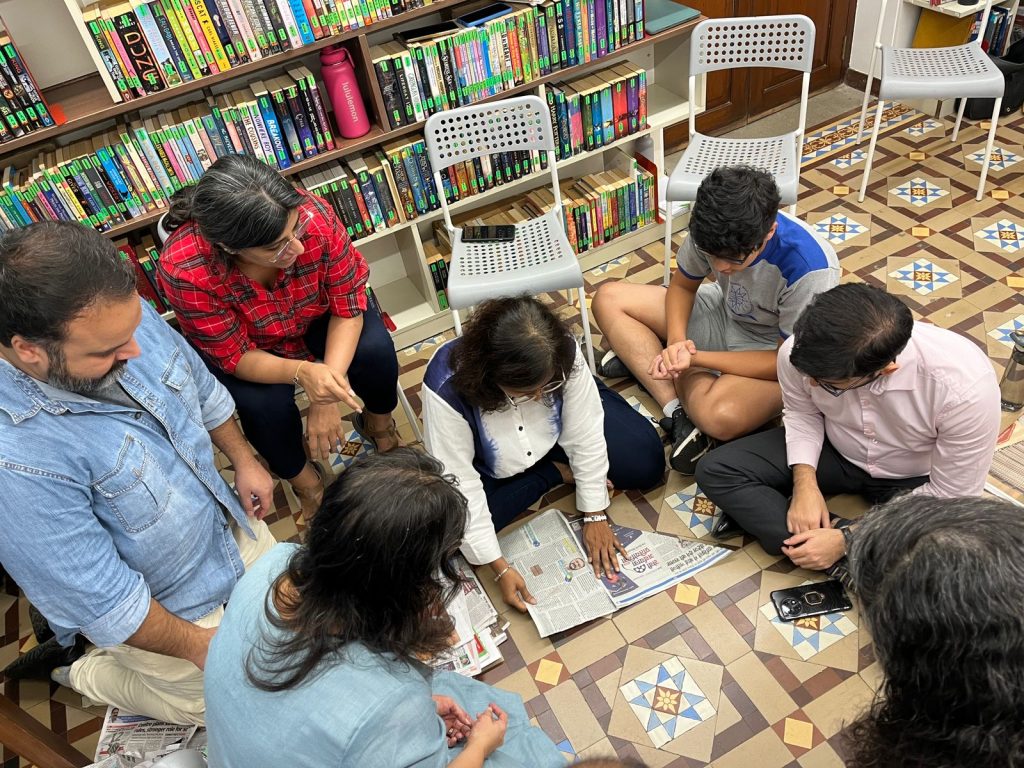
Through a series of activities and interactions, guided by Spokey and the Adhyayan team, the group coalesced around a shared purpose: to look at their school through an unfiltered, non-biased, judgment-free lens. The goal: to grow their understanding of the deep workings of their educational institution as the review unfolded through their shared perspectives.
Bombay International School, as an institution, was unique to me. It was founded by parents. I’ve lived and worked in school districts in the US where parents are involved at varying levels. In some, for a multitude of reasons, there is limited parental involvement. In others, parents hover over every decision the administration undertakes. The model at BIS was new to me. Here, the parents are integral to the inner workings of the school. This realisation prompted me as a researcher to delve into parent-led schools around the world.
That first long day of induction training as assessors left us mentally and physically exhausted from the sheer amount of information. As I look back, it was all necessary to help us begin our journey and support the work ahead of us. Norms were established. We developed a shared understanding of how to gather evidence on the 6 key areas of enquiry: Leadership & Management, Teaching & Learning, The Child, The Curriculum, Community & Partnerships and Infrastructure & Resources. Our ‘long day’s journey into night’ exploring the school’s life and its systems, prepared the collaborative school and Adhyayan team for the task at hand.
We were ready to move forward, collecting evidence, working towards the single purpose: identifying where the school is so that we can celebrate its good practice and together make recommendations for improvement to the school’s leadership team.
The next two days were a whirlwind of activity. Each team was assigned two of the six key areas of inquiry, ready to deep dive. Over 450 person-hours were spent delving into documents, hosting group and individual interviews with teachers, administrators, parents, students, and support staff.
While I hope that this description captures the essence of the framework of the Adhyayan experience, it was so much more! For me, the student participants brought such a breath of fresh air to a typically “adult-heavy” school experience. Their unfiltered enthusiasm as contributing members of the group was palpable, interjecting perspectives that were unique to their experience and a great reality check for what it really looks like on the ground. Their vision was mirrored in the eyes of the participating alumni. While some recalled similar experiences now embedded in the long traditions of the school, others acknowledged the change and growth within the school systems. Parents, so rightfully proud of their engagement in the school, grew their awareness of their school’s processes as they immersed themselves in deep conversations and enquiry. Teachers, supporting staff, and those in leadership roles yielded up troves of information about their school, unfiltered, secure that theirs was a really good school and happy to share their systems in pursuit of further improvement. Needless to say, it was evident that all of these stakeholders, led by the principal, were confident to open their school to the collaborative team of BIS and Adhyayan assessors, to peel back their current understanding to synthesise new findings. This process opened the gateway to build new perspectives on the school’s strengths and areas for improvement.
I described it in this regard:
- Each team member arrived with their own perspectives and possible agendas (each in their own bottle).
- Those perspectives were blended together into a giant cauldron (a shared vision).

And suddenly it was Day Four. Judgment Day! Now, you might think from this title that the team has gathered “inspection” information and is ready to throw down the cold, hard facts for remediation. I had thought that personal interests and biases might flavour the findings of this day, but I couldn’t have been more wrong. Once marinated, this “sauce” was the perfect blend and yielded an exquisite outcome. As an Adhyayan intern, this is what I had come halfway around the world to see! An unfolding process that I had to see to believe. Once the evidence was gathered, the group confidently reached consensus and charted a path forward for Action Planning the next day.
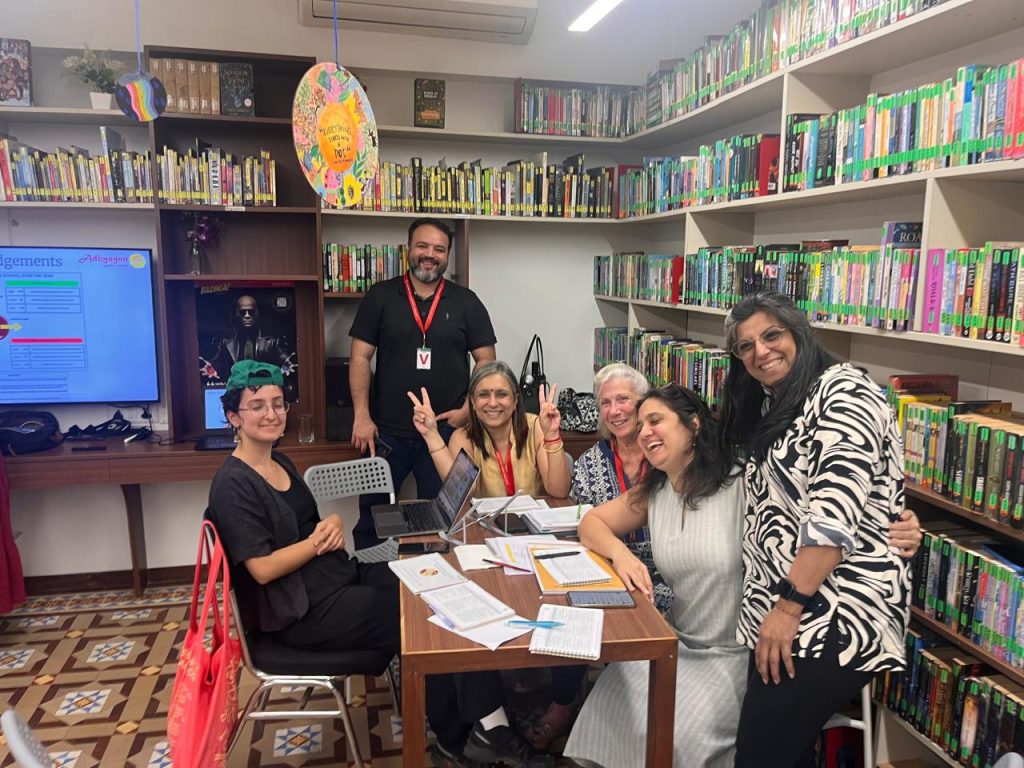
Aside from many beautiful moments of collective collaboration with the full team, our Adhyayan crew spent hours at the end of each day consolidating its work, probing for areas that we could improve for the overall good of the group. Thursday evening after Judgment Day, on the way home, my watch pinged yet again. It was telling me that this had been a stressful day.
Throughout the day, I had kept asking myself: “Have we gathered enough evidence? Have we reached all the corners and all the voices of this school? Have we listened well enough to synthesize the evidence and come to unbiased, meaningful key priorities for the school’s leadership to reflect and assist them in charting their future? The answers to these questions in my mind were yes. The entire team considered all of these points. The “judgement” was not a day of being judged, it was a process of looking together at the evidence seen and data collected through multiple eyes, explored through collective conversations. And then celebrating the many strengths of the school and its community, as well as making recommendations to assist them on their school improvement journey.
On Day Five, we were joined by the remainder of the school’s leadership, and the baton was officially handed over to the school and its principal. Once we had celebrated their many strengths and achievements, the real work began: The action planning workshop that followed was filled with rich conversations, always respectful, as the leadership and the collaborative review team came together. It’s an image that will stay with me long after I leave India.
On a personal note, during the review, Spokey encouraged my engagement with the SRC (Special Resources Committee) at all levels within BIS. As a lifelong special educator, this opportunity to meet with international partners that are amplifying educational access and opportunities for students with special needs was beyond fulfilling. The team of professionals at BIS who work with, support, and guide students and their instructional partners in this inclusive educational environment were impressive in their vision, commitment, and practice. They should take great pride in their work, embracing the support of their entire school community. While they have already created a full range of opportunities and support, it seems that they may just be getting started. It was my sincere pleasure to meet and spend time with these educators.
I head back to the US tonight, leaving behind new acquaintances and friends. I’d be remiss not to recognise the incredible support of the entire Adhyayan team, applauding Kavita and Spokey’s vision of one school at a time, giving a shoutout to my cousin, Professor Susan Hillman, whose gracious support allowed me this opportunity, and the unwavering guidance of Sumala, my Adhyayan Team Associate, as I navigated my role as her Intern. After becoming deeply engaged in this school’s story, the impact on my quest to support education wherever I live or travel will continue. Back in the States, a local education committee, of which I am a part, will meet with our state representative next month. I’ll look forward to engaging this new group of stakeholders in the thoughtful ideas that drive the Adhyayan practice: “what does good look like?”